Peru Travel Tips: Altitude, Fitness, Families and What to Pack
Blog


Ceri, Rickshaw Travel's Peru Travel Specialist, shares her top Peru travel tips, including advice on altitude sickness, fitness requirements for Machu Picchu and the Inca Trail, family travel in Peru, and what to pack for your Peru holiday.
Whenever I talk to people about Peru, the same questions come up. Will the altitude be a problem? How fit do I need to be? Is it suitable for children? What should I pack? I've just come back from another trip, so here's what I'd tell a friend planning to travel to Peru.
Altitude: what to expect and how to plan for it
Many of the places people dream of visiting are at a much higher altitude than where you’re likely to arrive from. Lake Titicaca, for example, sits at more than 3,800m above sea level and is the highest navigable lake in the world. On my latest trip, the Rainbow Mountain walk took me to around 5,000m, and the Inca Jungle Trek begins with a bike ride that starts well above 4,000m.
When we talk about altitude, it means that the air is thinner than you’re used to at home, so you can feel out of breath doing things that would usually feel easy, like climbing a flight of stairs. Everyone reacts to altitude differently. Some people barely notice it, while others feel breathless, tired or get a headache, and it isn’t always the people you’d expect (being fit doesn’t mean you won’t feel it!) The good news is that with a little planning, most people enjoy it. I always plan the pace of your trip with this in mind, making sure you have time to adjust, but here’s the general advice I give to our customers.
- Ideally it’s best to acclimatise gradually if possible, so where you start your trip matters. Starting in Lake Titicaca for example can be harsher than starting in Arequipa.
- Although you can get medication these days it’s open to debate how effective this is. What I recommend is to follow the locals and drink lots of coca tea made with actual dried leaves from coca plants, which is available everywhere!
- Take the lifts where possible rather than climb stairs, but if you must, then take it slowly, as well as walk around slowly.
- It’s best to avoid caffeine in the afternoons and to avoid alcohol completely. Light meals in the evening such as soups rather than heavy meals will also help you to sleep better.
A quick note: as I’m not a medical professional, I do also advise speaking to your GP or a travel clinic well before you travel, and checking official UK travel health advice such as Travel Health Pro.
How fit do you need to be to go to Peru?
I often speak to people who love the idea of Machu Picchu but worry they won’t be able to manage it. Whatever your age, what matters most is your health, your fitness and the pace you choose. I always say we can shape a Peru trip to suit you, from gentle days with big views to active adventures that involve more demanding treks, cycling and zip lining. Here’s an idea of what some of the well-known experiences involve:
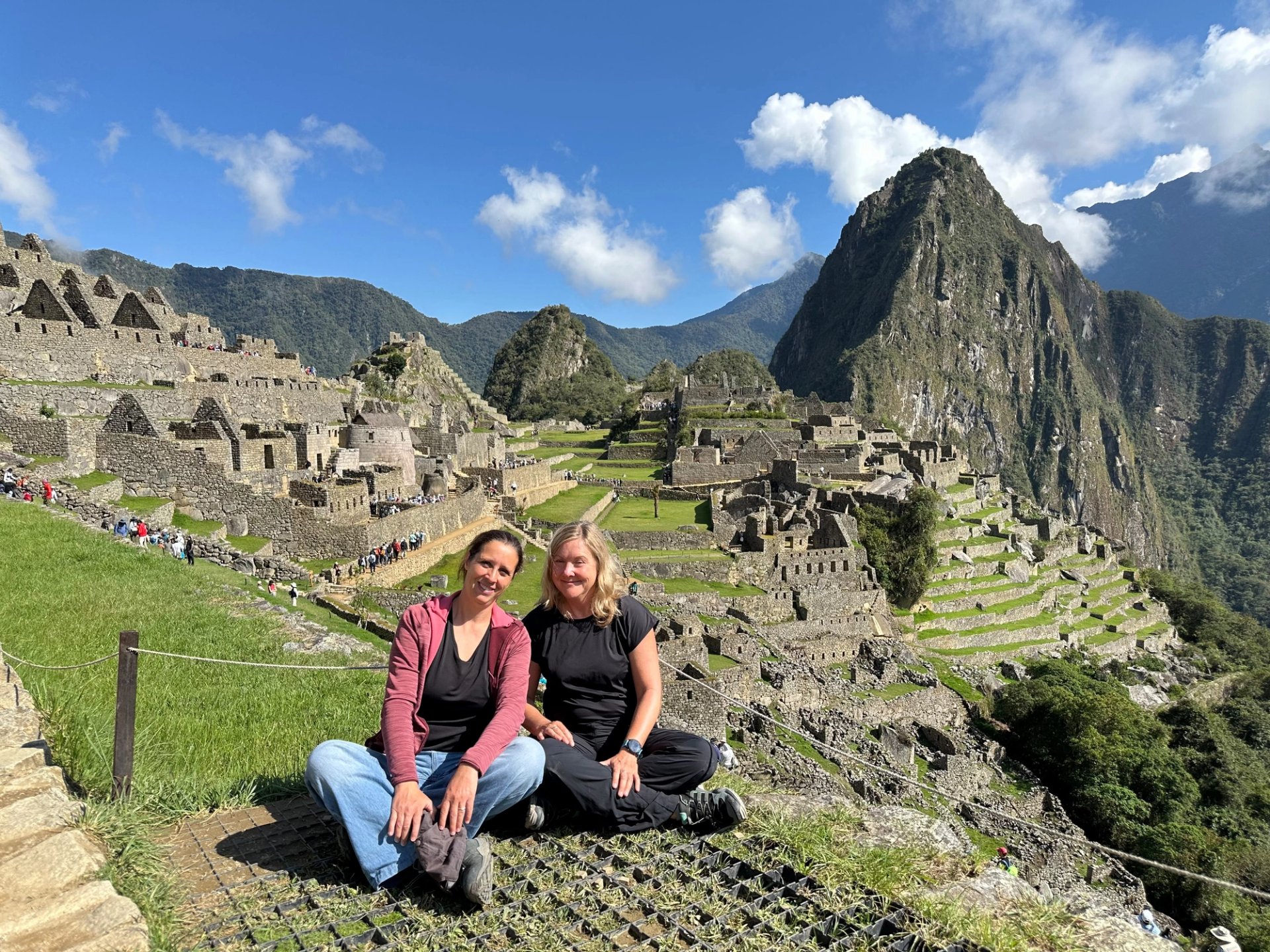
- Machu Picchu: a day walking around the site. The site itself is gentle walking, with plenty of stops for your guide’s explanations, so the challenge is in how you get there, not the visit itself. Arriving by train to Aguas Calientes takes no special fitness. From there, you can take the 25-minute bus up to the entrance, or climb the roughly 1,500 steps on foot, which takes about an hour and is a steady, steep workout. If you’re hoping for more of a challenge, you can also walk down through the jungle afterwards.
- Trekking to Machu Picchu: there are a number of trekking routes, with different fitness levels for each. The Classic Inca Trail and Salkantay are the big ones, with several days of walking, camping and some high passes, so you’ll want a decent level of fitness to enjoy them. If you’d like a taste of trekking, I’d recommend our shorter Inca trek. It gives you the best of both worlds, with time on the original Inca path and there’s no camping involved!
- Rainbow Mountain: 4am start, around 3.5 hours’ drive from Cusco, then about an hour’s walk at around 5,000m. The altitude is what makes it tough, so you need to walk very slowly up the ascent and stop frequently to enjoy the views. I would say it’s a challenging day, but most people can manage it as long as you take it slowly and have had a few days to acclimatise first.
- Red Valley add-on: a longer hike, steep and loose underfoot on the way down. You need to have strong knees to come down this! A high level of fitness is required, but it’s an optional add-on at Rainbow Mountain, so you can skip it if you think it’s too much.
- Inca Jungle Trek: a 55km downhill bike ride, then two days of walking. A high level of fitness is required as you also have to carry enough for the few days on your back and it gets humid with lots of uphill walking. Children over 10 should be fine, as long as they are used to hill walking. Rafting and ziplining are optional extras, and you can take the bus up to Machu Picchu on the last day.
- Titicaca Train: a relaxed 10.5-hour day on board, with no physical effort. It works as a rest day, and it suits anyone who’s comfortable with a long day on a train.
Travelling with kids in Peru
At Rickshaw, we love planning family trips to Peru. The mix of ancient cities and otherworldly landscapes makes it a family adventure unlike any other. Personally, I think it’s a destination best enjoyed by tweens and teens, as they’re old enough to join in with the hikes and activities, and they tend to take more of an interest in Peru’s fascinating history too.
My main piece of advice for families is not to rush. There’s so much to see that it’s tempting to try and fit in everything Peru has to offer, but journey times can be long, especially for children, and as every parent knows, things don’t always go to plan, so it’s worth leaving some extra room in your itinerary. Children aren’t at extra risk from altitude sickness, but it can still affect anyone, so we always plan your trip with that in mind.
Here are some of the places I’d recommend most for families:
- Colca Canyon: the world’s third-deepest canyon is a truly breathtaking sight, and even driving down into it is an experience in itself. On our Condors in the Colca Canyon trip, you can meet a local family and help out on their farm, which is a wonderful way to show your children a completely different way of life. A family-favourite activity here is ziplining too.
- Huacachina and the Islas Ballestas: this little stretch of Peru’s coastline has a magical feel that kids tend to love. The protected Ballestas islands, just off the coast, are home to sea lions, iguanas, pelicans, penguins and more, a bit like a mini Galapagos, while Huacachina is a small town built around an oasis and surrounded by giant dunes that are perfect for sandboarding and dune buggying.
- Machu Picchu: and of course there’s Machu Picchu. If you’re travelling with older children, the Inca Trail is a great option. Otherwise, you can get there by train or take on a shortened trek.
- The Amazon Jungle: our Into The Amazon trip one is great for families. There’s no altitude to worry about, the lodge is a short boat ride from Puerto Maldonado, and kids can spot monkeys, macaws, caimans and even giant otters, climb a canopy tower and have a go at piranha fishing.
Peru independent travel vs a trusted tour company
You can organise a trip to Peru yourself, and plenty of people do, but a lot of the detail is easy to underestimate. Machu Picchu entry is now capped and tied to circuits and timed slots, for example, and long journeys in the mountains don’t always run to plan. It helps to have people who know the country and the current rules, and who can sort things out if something changes.
We also work only with local partners we know well and have vetted ourselves, so you can trust the guides, drivers and places you stay, and rest that the money you spend stays with local people.
Bugs, weather and other small things
- Insect repellent: pack it for the jungle. I came back from the Inca Jungle Trek covered in bites.
- Weather: it can change quickly. The day before I went up Rainbow Mountain, it was snowy and cloudy, and my day was clear blue sky, so make sure you’re packed for all seasons (and layer up!).
- Early starts: several of the best things start before dawn, so go to bed early.
- Book as far in advance as possible. Limited permits sell out quickly so don’t leave it too late and end up disappointed.
There’s no single right way to see Peru, only the right trip for you. That’s why we tailor every itinerary around your age, your fitness, who you’re travelling with and what you’d love to see. If you’re interested to know more about travelling to Peru with us, get in touch.
Looking for more inspiration? Read more travel blogs

View our Itineraries and bite-sized trips
