
Staying in a hanok in South Korea: what it’s really like
Blog


A night in a traditional hanok is one of the highlights of any trip to South Korea. Our South Korea specialist, Steve, stayed in one on his recent trip, and here he shares what a hanok actually is, what a night in one is really like, and who they are best suited for.
At Rickshaw, we've always believed that where you sleep is part of the trip, not just somewhere to leave your bags at the end of the day. Whenever we can, we choose small, locally run places with real character, the kind of stay that makes you feel like you're somewhere, rather than anywhere. In South Korea, that place is the hanok.
Of all the stays on a Korea trip, a night in a hanok is often the one people look forward to most, and I can see why. It's also very different from a normal hotel, so I wanted to share what a hanok actually is and how to make the most of it.
What is a hanok?
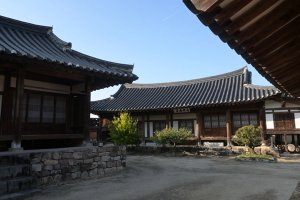
A hanok is a traditional Korean house, and once you know a little about how they're built, you start to notice just how much thought has gone into them. They're designed to live in harmony with nature, following pungsu jiri, the Korean version of feng shui. Ideally, a hanok sits with a mountain behind it for shelter and water nearby for balance, and it faces south to make the most of the sunlight and warmth.
You'll recognise one straight away by its curved, tiled roof, with the edges sweeping upwards. Inside, everything is made from natural materials: timber beams, clay walls, stone, and hanji, a traditional paper made from mulberry bark that covers the doors and windows and softens the light. Rooms are usually arranged around a central courtyard, which brings in fresh air and light, and traditionally there were separate spaces for family life and for guests.
Hanoks are heated by ondol, an underfloor heating system that dates back centuries, which is exactly why Koreans have traditionally slept on the floor. In winter, it's lovely and warm, and it makes the whole house feel calm and cosy. Today, many hanoks have been carefully restored as small guesthouses, often run by local families, and whole villages of them still stand in places like Jeonju and Andong.
What staying in a hanok is really like
My hanok was tucked inside a walled garden that looked like a giant bonsai garden, all neatly shaped trees and little paths, and it was just a two-minute walk from the heart of the old town. Stepping through the gate felt like leaving the modern world behind, which, in a country as fast-moving as Korea, is quite something.
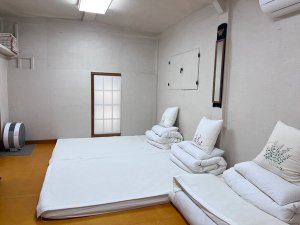
I'll be honest about the room, though, because it's worth knowing what to expect. The rooms can be pretty basic. There's no bed - instead, you sleep on a thin mat called a yo, laid out on the heated floor, which has a little give to it but is still firm. Running along the outside of the building was a wooden walkway which became my favourite spot to sit.
If you're picturing the luxury of a Japanese ryokan, a traditional hanok isn't that. It's fairly simple, and that's the point. What you get instead is the quiet of the courtyard in the evening, the soft light through the paper doors, and in the morning I stepped outside into the garden with the town still waking up.
Hanoks do vary too. Some are very traditional like mine, while others have been gently updated with a slightly thicker mattress and your own modern bathroom, so you get all of the atmosphere with a little more comfort.
Who is a hanok stay for?
Honestly, most people. If you love the idea of staying somewhere that could only be in Korea, a hanok is a must, and it's usually the night people talk about long after they get home. It's a lovely experience for families, too. Children tend to think sleeping on the floor is a brilliant adventure, a bit like a sleepover, and the courtyards give them a safe space to explore while you enjoy a cup of tea. It's also a gentle, hands-on way for them to see how people in Korea have lived for centuries.
The one thing I'd say is that sleeping on the floor isn't for everyone. If your back or knees aren't what they used to be, getting up and down from a mat might not be the comfiest night you've had. That's why we usually suggest just one night, which is plenty to soak it all up, and we can point you towards the hanoks with a bit more comfort. Just let us know, and we'll find the right one for you.
What about hotels in Seoul?
Small, characterful places do exist in Seoul, but the good ones can get very expensive. So, in the city, we've chosen great modern hotels in great locations instead, which leaves more of your budget for the experiences that make a trip special. That means you’ll likely be staying in hotels that feel more business-like and less ‘stereotypically’ Korean. But being fast, efficient and everything just working is a big part of daily life in Seoul, so a sleek city hotel is arguably a truer reflection of how many Koreans live than a picture-perfect traditional stay.
Thinking about a hanok stay?
For me, a night in a hanok sums up why we care so much about where you stay. It isn't the fanciest night of the trip, but it's the one that makes you feel most like you're really in Korea. If you'd like to add one to your trip, or you're wondering which hanok would suit you best, get in contact with us.
Looking for more inspiration? Read more travel blogs

View our Itineraries and bite-sized trips
