South Africa's best wildlife spots


Discover our South Africa wildlife holidays
South Africa is renowned for its wonderful wildlife, particularly on land, but also in the skies and in the water. And from safari to self-drive holidays, there’s a chance to discover the highlights with an unforgettable South Africa wildlife holiday. Take an evening game drive and watch as the bush comes alive at sunset, snorkel with seals in Plettenberg Bay and keep your eyes peeled for whales in Hermanus. Not sure where to start? Our experts will help you create a memorable itinerary for South Africa so you can experience its magic in person.

Explore Kruger National Park
One of the largest national parks in the whole of Africa, Kruger National Park easily tops the list of South Africa’s best wildlife trips, thanks to its size and variety of habitats and animals. No two game drives are ever the same, and there’s so much to spot that you’ll need to keep your camera and a good pair of binoculars handy to capture every moment. Whether you choose to explore with an experienced guide or on a self-drive holiday in South Africa, it’s unmissable.
Spot the big 5 on safari
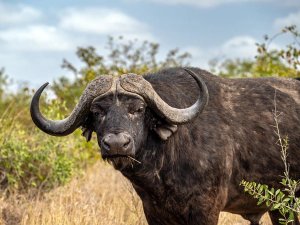
Spotting the Big Five – lion, elephant, Cape buffalo, leopard, and rhinoceros – usually makes the wishlist of anyone taking a safari in South Africa. And the country is one of the best places to see these iconic African animals, although it’s still a great achievement to find all the members of the Big Five during one safari trip – after all, sightings can never be guaranteed when you’re dealing with wild animals, especially the famously elusive leopard. They’re not confined to one single area either, with a chance to see all five in the sprawling Kruger National Park, the reserves in the Cape region and other national parks across the country.
Lion
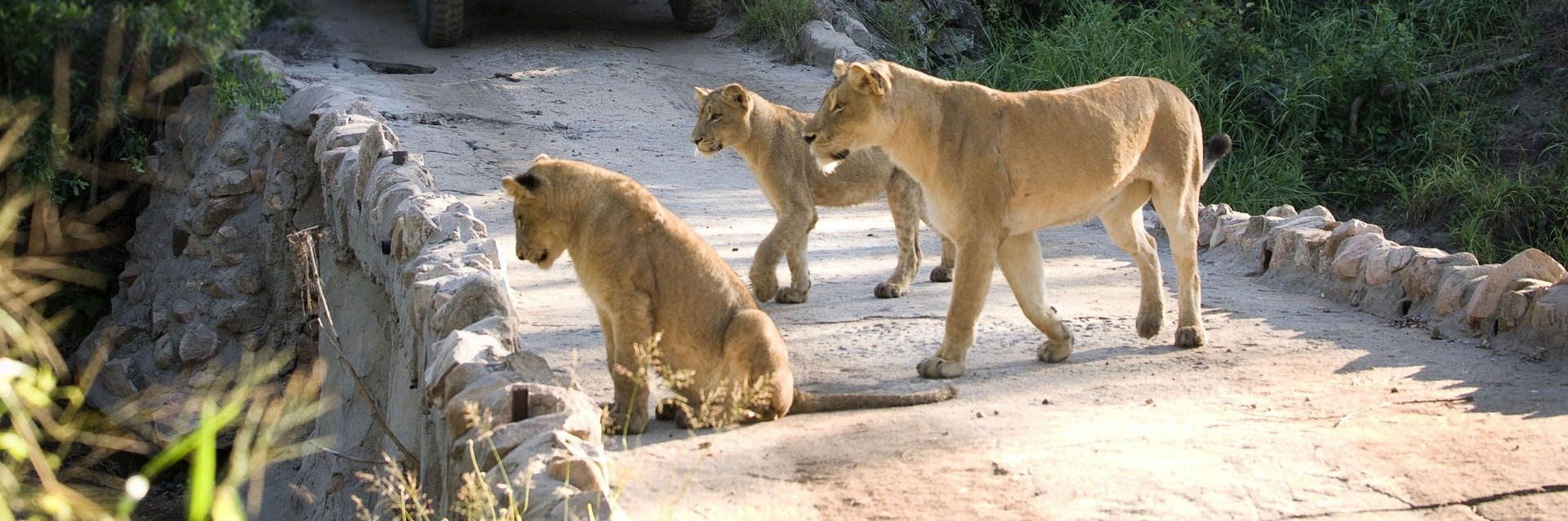
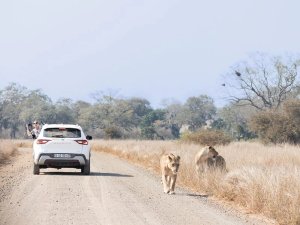
There are around 3,000-4,000 wild lions in South Africa, the majority living in the country’s protected reserves and national parks. Kruger National Park is one of the best places to see them, along with the private reserves like Sabi Sands, as some of the biggest lion populations live in these areas. You can also find black-maned lions at the Kalahari/Kgalagadi Transfrontier Park on the border with Botswana, as well as some locations on the Cape – around 26 lions now live in Addo Elephant Park, with 17 spotted in the main park.
Leopard
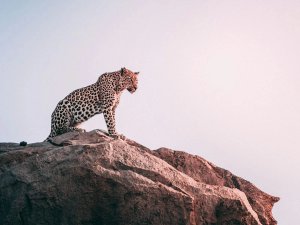
By far the hardest of the Big Five to see, leopards are most active during the hours of darkness, so you’ll often have most luck seeing these elegant predators around dusk when they emerge after a daytime snooze hidden high in the trees or camouflaged in the undergrowth. If you’re lucky, you’ll find one returning to its kill in the branches, where they hide their prey from other predators or emerging in the twilight to hunt down their next meal. If you’re determined to get a sighting, Sabi Sands is known not only for the number of leopards, but also being one of the easiest places to see them, while Kruger National Park is home to as many as 1,500 leopards. Some of the camps near the border with Botswana, such as Madikwe Game Reserve, are good alternatives for less visited safari destinations.
Elephant
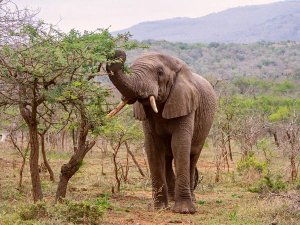
Nearly half of all African elephants live in southern Africa, with at least 30,000 of them found in South Africa. One of the densest concentrations live at Addo Elephant Park (unsurprisingly!), where herds can number dozens, so you can spot calves as well as solitary bulls ambling through the bush, snacking on the trees as they go. Kruger National Park is another great location to see them, with around 20,000 elephants living in its two million hectares.
Rhino
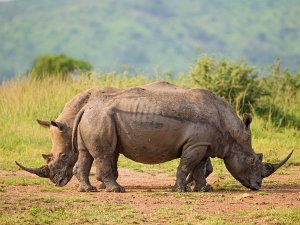
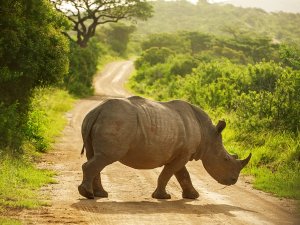
You’ll find both white and black rhino in South Africa, which is home to over 80% of the world’s white rhinos and its largest number of black rhino (followed closely by Namibia). To see the rarer black rhino, Kruger National Park is one of the best places on the planet, along with Hluhluwe-iMfolozi Park in KwaZulu-Natal, while both are home to southern white rhino too. You can also find white rhino at some reserves in the eastern Cape, and a growing population of black rhino at Addo Elephant Park.
South Africa wildlife highlights
While the Big Five often take the spotlight, that’s only the beginning of the wildlife in South Africa.
Plains animals
Head to any of the plains across South Africa’s national parks and reserves and you’ll have the chance to watch grazing herds of zebra, wildebeest, and various antelopes and gazelles, such as springbok, kudu, impala and gemsbok. The country is also home to two types of giraffe, the South African giraffe with its darker star-shaped markings and lighter-coloured Angolan giraffes, which can both grow up to 20 feet tall in order to be able to feed on leaves on the highest branches.
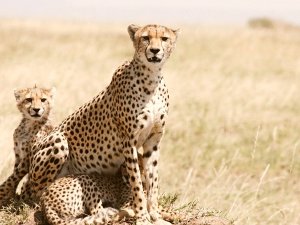
Cheetah
This rare big cat is only found in a few areas of South Africa, including Mpumalanga and the Northern Province as well as the Kalahari in the Northern Cape. Happily, numbers are increasing and you’ve got a good chance of seeing them in the open savanna areas in Kruger National park, or some of the private reserves surrounding Kruger.
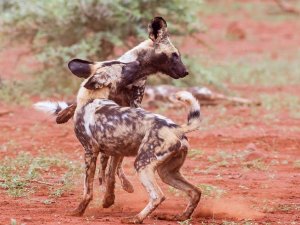
African wild dogs
One of Africa’s rarest predators, there’s a chance to spot these endangered wild dogs at Kruger National Park. With their colourful mottled coats and rounded ears, you’ll often hear them calling to each other as the packs work together as a team to bring down their prey, unlike big cats which tend to prowl alone. Morning and late afternoon are the best times to spy them out hunting.
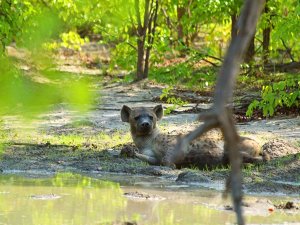
Spotted hyena
Known for their giggling or laughing call (actually a sign of stress or tension), you’ll find spotted hyena across South Africa’s national parks and reserves, living in savanna and woodlands. The female-dominated clans can number up to 80 individuals, although smaller groups are more common, and they’re often found in the same areas as lions, often scavenging their kills. Most common in the north-east, especially Kruger National Park and surrounding reserves like Sabi Sands.
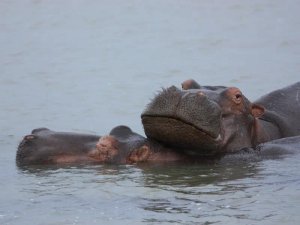
Hippo
There are thought to be over 11,000 hippo in South Africa, so if you’re visiting a reserve with river, lake or other wetlands, you’ve got a good chance of seeing them semi-submerged in the water as you pass. One of the best places is iSimangaliso Wetland Park, where they even emerge beyond the park’s boundaries, while Kruger National Park is home to some permanent rivers and dammed areas where hippo are easily seen. Despite being herbivores, hippos are known to be territorial and often bad-tempered, so considered one of Africa’s most dangerous animals – keep a safe distance!
Smaller mammals
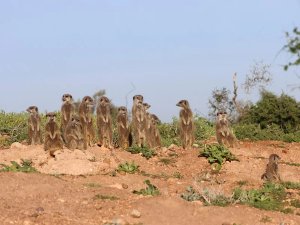
It’s not just the big beasts which will make your South Africa safari so memorable – spot meerkat in the Kalahari and Kgalagadi Transfrontier Park, as well as some of the smaller cats, mongoose, warthogs and more. If you have your heart set on seeing the rare and endangered pangolin, some reserves offer special guided tracking, including Tswalu Kalahari (also a good place to see aardvarks) and Phinda. Or set yourself the challenge of finding the Little Five, which includes the elephant shrew along with the ant lion, rhino beetle, buffalo weaver and leopard tortoise.
Birds
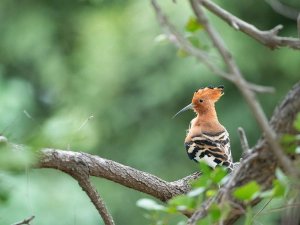
South Africa is heaven for bird-lovers, with 862 officially recognised species, including more than 160 endemic birds – the highest number of any country in Africa. For novice bird-spotters, you’ll be able to see everything from ostrich and vultures to eagles and hornbills, as well as colourful smaller birds such as kingfisher and lilac-breasted roller. Many of South Africa’s national parks are home to hundreds of bird species, from the more common to the fascinating and rare, so you won’t be short of types to tick off. Look out too for penguins on some of the beaches of the western Cape, most famously Boulders Beach near Cape Town.
Marine life
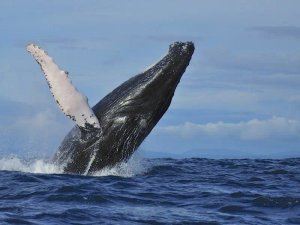
With so much spectacular wildlife on land, it’s easy to forget there are some equally memorable creatures living off the coastline. Visit between June and November and you’ve got an excellent chance of glimpsing whales on their annual migration, especially around Hermanus. The southern right whale is one of the most commonly spotted when they come to calve between August and October, but you could see humpback and Bryde’s whale too, along with dolphins. The country is also known as the Great White capital of the world, especially at Shark Alley near Gansbaai in the Western Cape, and Mossel Bay – sightings are most likely from June to September.
South Africa wildlife: What to see where
With so many wildlife experiences to choose from across the country, here’s what you can expect to see on a South Africa safari.
Kruger National Park
The largest national park in South Africa, there’s an enormous two million hectares of Kruger National Park, and it’s home to an equally vast number of creatures – a total of 147 species of mammal, 507 types of bird, 114 species of reptile, 34 kinds of amphibians and 49 species of fish. It’s one of the best places in South Africa to tick off the Big Five, but also has some more unexpected inhabitants, from elephant shrews, rhino beetles and tiny fruit bats to honey badgers and rare scaled pangolin.
Sabi Sands
Bordering Kruger National Park, Sabi Sands Game Reserve is famed for being another great place to spot the Big Five, but it’s particularly good if you’re hoping to see leopards. The area has its own private checklist too, known as the Sabi Sands Secret Seven, as these nocturnal creatures are considered some of the most difficult animals to see on safari – aardvark, African wild cat, civet, large spotted genet, pangolin, porcupine and serval. The reserve is also home to endangered wild dogs and more than 500 species of bird, perfect for birders.

Addo Elephant Park
The name is a giveaway when it comes to the big highlight here – elephants, with more than 600 living in the herds at Addo Elephant Park. But you can see not only the Big Five, but the Big Seven during your visit, with a chance to spot the Southern right whale and Great white shark off the coast. Along with the larger creatures, including a herd of more than 400 Cape Buffalo, you can also look out for the rare flightless dung beetle, which has right of way on Addo’s roads.
Eastern Cape
South Africa’s Eastern Cape is home to a string of smaller reserves which are perfect if you’re hoping to combine a safari with a drive along the Garden Route. Many are easy distance of Port Elizabeth (Gqeberha), and these private reserves tend to be quieter and more intimate – some are even reached by river, so you may be able to enjoy a short kayak or boat safari too. In some places, you can see the Big Five, while rhino and lion, plus plains animals like giraffe, zebra and wildebeest are common across the Eastern Cape.

Respect the rules of the reserve
Going on safari is incredibly exciting, but it’s important never to forget that you’re in a wild environment, surrounded by wild animals that can be dangerous. Our expert and highly qualified guides will always take precautions to ensure your safety, and every year millions of people enjoy exciting safe safaris that operate without a hitch but you should always follow their instructions.
That includes staying at least 20m away from animals, more for larger mammals, always remaining in vehicles, keeping quiet and never feeding the wildlife. It’s especially important to stay safe if you’re on a self-drive safari; always stick to the roads and don’t be tempted to drive too close to the wildlife.
Be inspired by our South Africa Wildlife trips
Simply pick and choose your favourite bite-sized trips or ready-made itineraries, add them to your Travel Plan and request a quote. It’s that easy. Our Travel Specialists will then put together a holiday that’s right for you. Plus, you’ll have the same team for the life of your booking & support from our local partners on the ground 24/7.