.jpg?w=1920&q=85&auto=format)
Tanzania wildlife guide


The largest country in East Africa, Tanzania is home to an impressive variety of wildlife, from the Big Five to a huge number of bird species, marine life and more. But it’s not only the chance to spot sleek leopards and mighty elephants; Tanzania is also the home of the Great Migration, one of the world’s most astonishing natural spectacles, as millions of wildebeest, zebra and gazelles brave dangers galore as they journey hundreds of miles to find water and grazing.
From the savannah to the mountains, rivers, lake and coast, not to mention 22 national parks, 32 game reserves and countless protected areas, you’ll find far more than the classic safari favourites as you explore Tanzania. This wildlife lover’s paradise is one of the best places to go on safari though, especially the iconic Serengeti National Park and Ngorongoro Crater, but smaller and less-visited parks and reserves too.
Not sure where to start? Our Tanzania wildlife guide has everything you need to look out for and where to find it.
The Big Five
If you’re planning a safari in Tanzania, spotting the Big Five is usually right at the top of the wishlist. Tanzania is one of the best places in Africa to see these legendary animals in the wild: lion, elephant, leopard, rhino and Cape buffalo. Both the Serengeti National Park and the Ngorongoro Conservation Area are home to all five, making them classic safari destinations for first-timers and seasoned wildlife lovers alike. While leopards are famously shy and often the trickiest of the bunch to spot, experienced guides know just where to look. With a bit of patience (and a little safari luck), there’s every chance you’ll tick off all of the Big Five on a single trip – and come home with some pretty unforgettable wildlife stories to tell. And even when you’re not on the lookout for the Big Five, you’ll be surrounded by incredible wildlife, from towering giraffes and lumbering hippos to vast herds of zebra and wildebeest stretching across the plains.

Lion
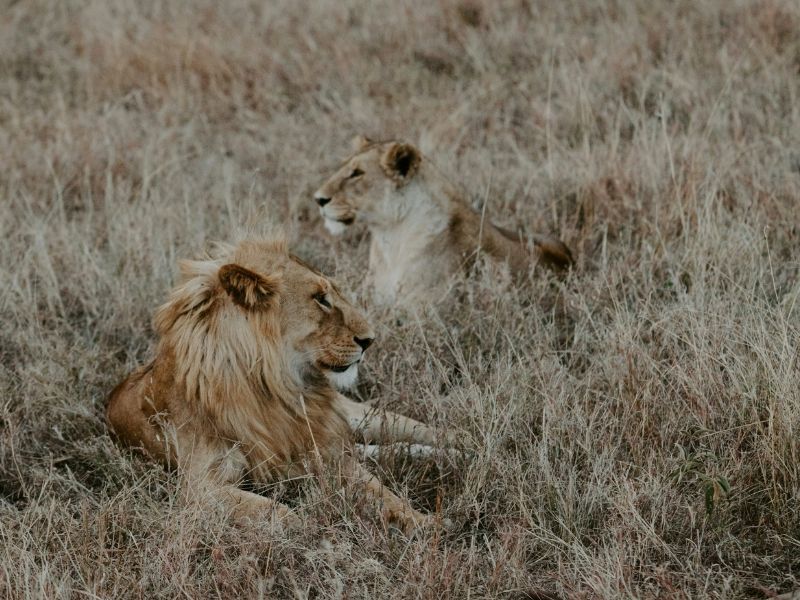
Tanzania has the highest population of wild lions on earth, with prides in the Serengeti, Ngorongoro Crater, Tarangire National Park, Nyerere National Park and the less visited Ruaha National Park. There’s a good chance of spotting them in January and February, when the birth of wildebeest and zebra calves provides plenty of opportunities for a meal, as well as during the dry season from June to mid-October.
More unusually, Lake Manyara is famous for its tree-climbing lions. It’s thought they head up into the branches to escape insect bites, especially from tsetse flies, and while they’re not always easy to spot in the foliage, it’s something you can only see in a few places world-wide.
.jpg?w=300&q=85&auto=format)
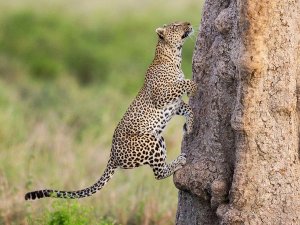
Leopard
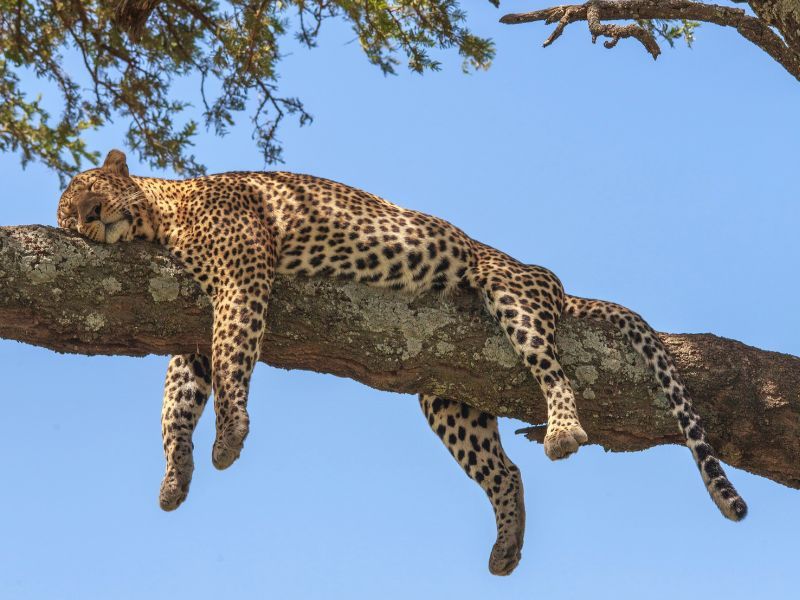
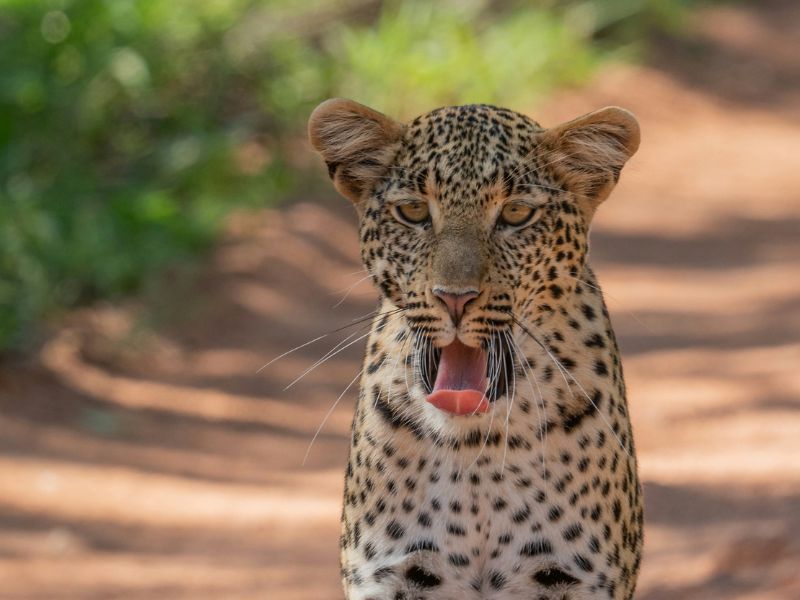
The hardest of the Big Five to spot, leopards are famously elusive and masters of camouflage. They often spend the heat of the day hidden in dense undergrowth or stretched out on the branches of acacia trees, where they’ll hoist their kill high above the ground to keep it safe from scavengers like lions and hyenas. Most active during the cooler hours of dawn, dusk and throughout the night, these sleek, powerful cats can be a real challenge to find – but that only makes a sighting even more rewarding. Keep your eyes peeled for a tail dangling from a tree or the flash of a spotted coat through the long grass, and listen to your guide, who’ll know the tell-tale signs to look out for. The Serengeti and Tarangire National Park are two of the best places to spot leopards, while smaller populations can also be found along the riverbanks in Ruaha National Park. If luck is on your side, watching one silently stalk its prey or lounge in the branches above is a safari moment you’re unlikely to forget.
.jpg?w=300&q=85&auto=format)
.jpg?w=300&q=85&auto=format)
Elephant
Is there a more classic safari sight than a herd of elephants ambling slowly across the savannah, stopping to snack on a few leaves or a drink at a water hole along the way. From solitary bull elephants to adorable calves, elephants are found in most parks in Tanzania, and happily conservation and anti-poaching measures mean that their numbers are on the rise. If you’re visiting from July to October, you can also experience Tanzania’s elephant migration, when thousands of these magnificent creatures head to the river at Tarangire National Park during the dry season.
Rhino
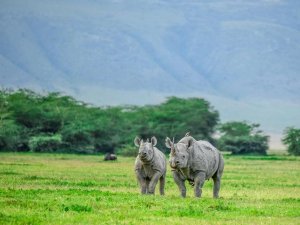
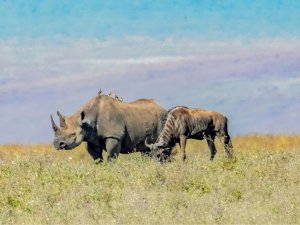
The endangered black rhino is also making something of a comeback in Tanzania, with numbers rising to almost 270 from a low of just 30 rhino a couple of decades ago. Almost all are found in northern Tanzania, including populations in some protected areas in the Serengeti. But the best place to see black rhino in Tanzania is the Ngorongoro Crater, where you may be able to spot them in the caldera, although usually only at a distance unless you’re very lucky.
While black rhino are officially present at Nyerere National Park, it’s very rare to see one there. There are no white rhino in Tanzania, and no black rhino in Tarangire or Ruaha National Parks.
Buffalo
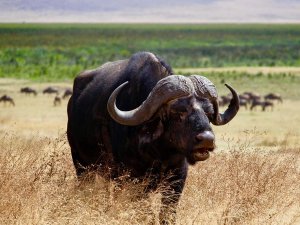
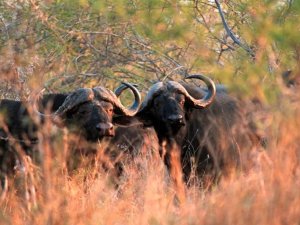
These formidable creatures can weigh up to 1,500lbs and charge at speeds of 37mph if they feel threatened, making them one of the most dangerous creatures in Africa. An adult buffalo’s only predator is the lion, with several of the big cats needing to work in a team to have any chance of overcoming these imposing animals. Although some buffalo stay in smaller groups, they’re often found in herds that number thousands and can be seen heading to water sources in the morning and late afternoon, making them easy to spot in the majority of Tanzania’s national parks.
Tanzania wildlife highlights
Plains animals
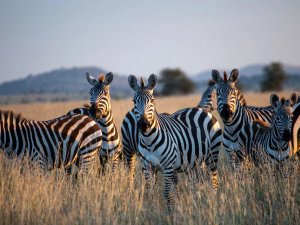
Tanzania is famous for its Great Migration, when up to 1.5 million wildebeest, hundreds of thousands of zebra, and Grant’s and Thomson’s gazelles journey in ‘mega herds’ from the southern Serengeti into the Masai Mara in Kenya. The Serengeti is the place to marvel at these astonishing numbers; in January and February, you can experience calving season around the Ndutu Plains, with the herds then making their way through the western corridor until they reach the Grumeti and Mara rivers between June and August.
As well as the migrating herds, you can find the same species in other national parks across Tanzania, along with eland, kudu, oryx, sable, impala and various other types of antelope, especially in the Serengeti and Tarangire National Park.

The Maasai giraffe
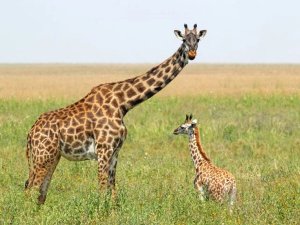
Tanzania is home to the world's largest population of wild giraffes, with more than 30,000 roaming freely across its national parks and protected areas. The only species you'll find here is the Maasai giraffe, Tanzania's national animal, recognised by its striking, jagged patchwork markings and impressive height. Taller and larger than other giraffe species, Maasai giraffes can reach up to six metres tall, making them the world's tallest land mammals. Despite their size, they're surprisingly graceful, often seen strolling across the savannah or delicately browsing leaves from the tops of acacia trees using their long, dark tongues.
Giraffes are a common sight on safari, and it's not unusual to spot small groups – known as towers – calmly wandering the plains alongside zebras, antelope and elephants. They're especially photogenic at sunrise and sunset, when their silhouettes stand out against the golden African landscape. The Serengeti, Tarangire, Nyerere and Ruaha national parks are all fantastic places to see Maasai giraffes in their natural habitat, whether they're feeding, gently sparring with one another or breaking into their surprisingly elegant, loping run across the plains.

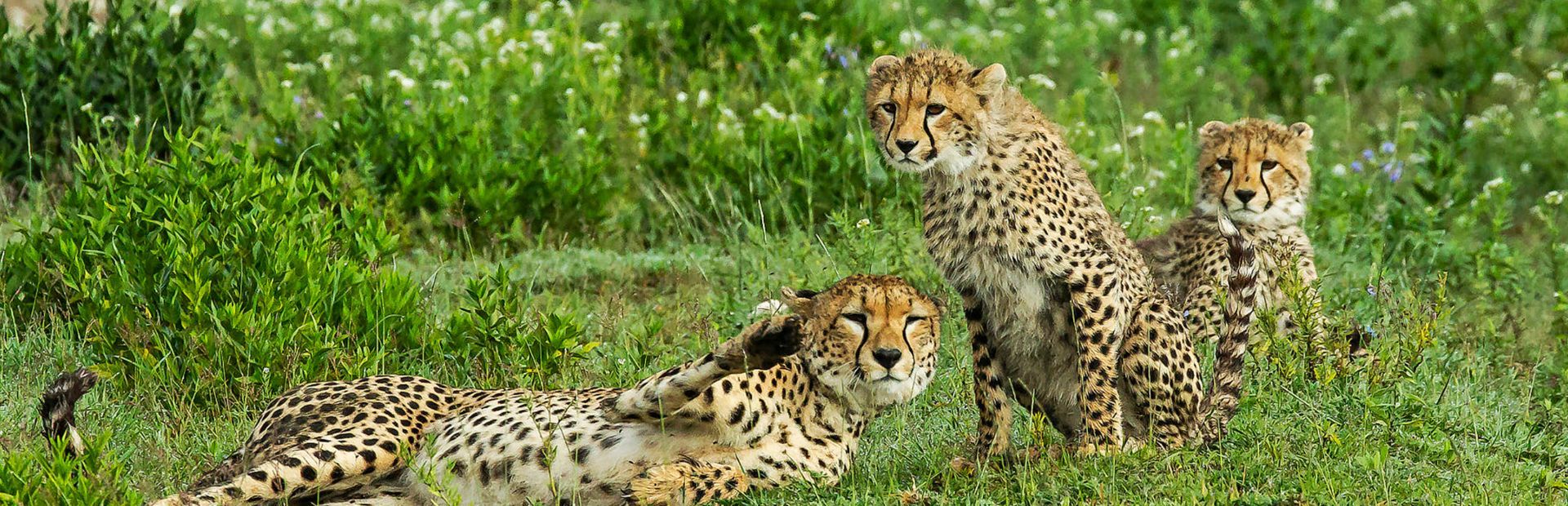
Cheetah
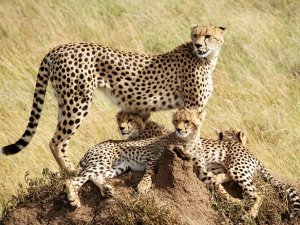
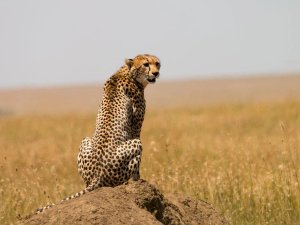
The cheetah is the other iconic big cat you'll find in Tanzania, and one of the most thrilling animals to encounter on safari. Found across many of the country's northern parks – including the Serengeti, Tarangire and Ngorongoro Conservation Area, though not usually Lake Manyara – cheetahs thrive in wide, open landscapes where they can scan the horizon for potential prey. Unlike leopards, which rely on stealth and strength, cheetahs depend on incredible speed. Capable of reaching up to 70mph (113km/h) in short bursts, they're the fastest land animals on Earth, accelerating from 0 to 60mph in just a few seconds.
The Serengeti is one of the best places to spot cheetahs, particularly as it's home to large numbers of Thomson's gazelles and other small antelope, which make ideal prey for these lightweight hunters. Watching a cheetah patiently survey the plains from a termite mound before launching into a lightning-fast chase is one of the most unforgettable wildlife spectacles Tanzania has to offer. Even when they're not hunting, they're fascinating to observe, often resting in the shade or perched on a small rise to keep an eye on their surroundings.
African wild (painted) dogs
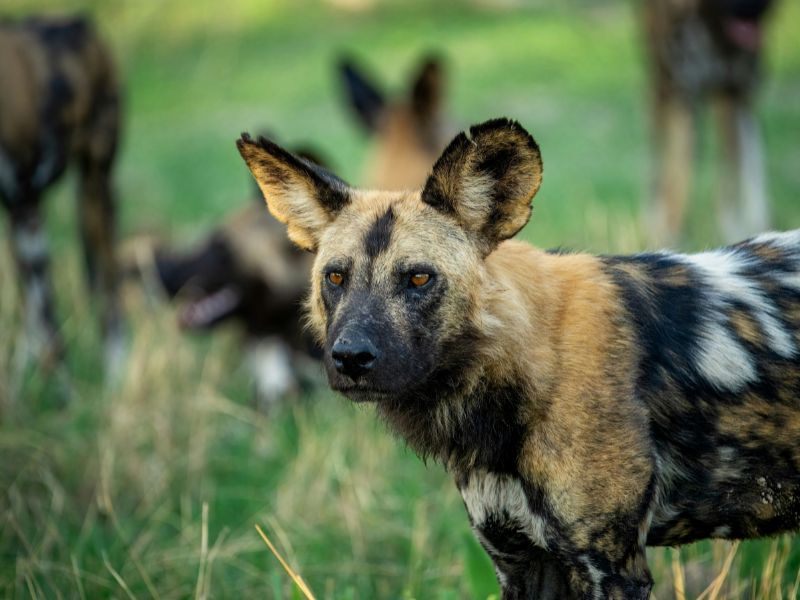
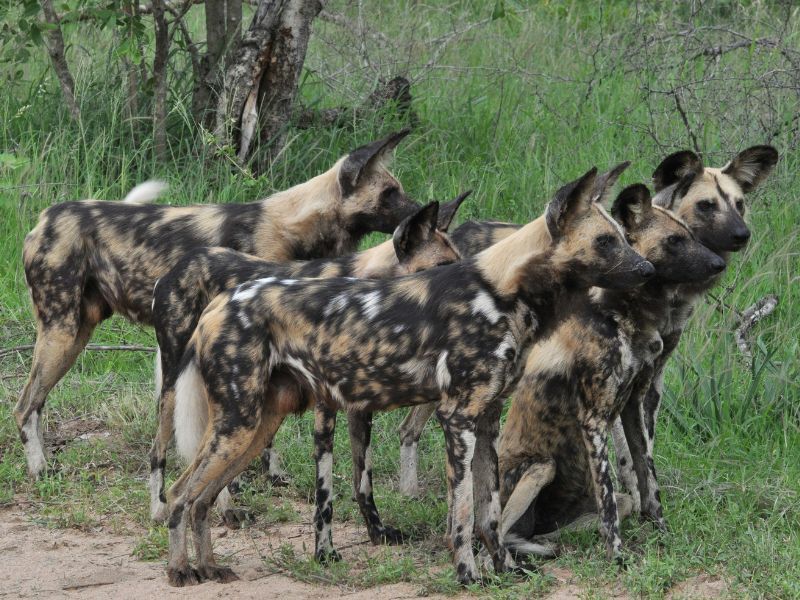
One of Africa's rarest and most endangered predators, African wild dogs are among Tanzania's most special wildlife sightings. Once widespread across the continent, their numbers have declined significantly, making an encounter with these remarkable animals all the more memorable. Tanzania is one of the best places to see them, with healthy populations found in Nyerere and Ruaha national parks, where vast, remote landscapes provide the perfect habitat.
Highly social animals, wild dogs live in close-knit packs that work together with incredible teamwork. Before setting off to hunt, the pack greets one another with an excited chorus of chirps, squeaks and high-pitched calls, creating an unforgettable soundtrack if you're lucky enough to be nearby. Unlike big cats, wild dogs rely on endurance rather than stealth, chasing their prey over long distances with impressive stamina and coordination. Because they're so elusive and roam across huge territories, sightings are never guaranteed – making every encounter a real safari highlight and one that many seasoned wildlife enthusiasts count among their most treasured experiences.
.jpg?w=300&q=85&auto=format)
.jpg?w=300&q=85&auto=format)
Spotted hyena
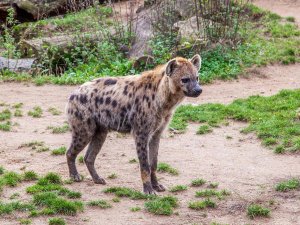
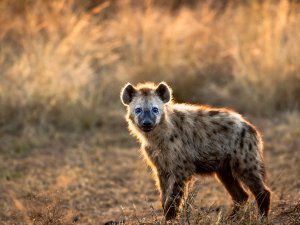
Spotted hyenas are among Tanzania's most adaptable and misunderstood animals. Found across the country's grasslands, woodlands and open savannah, they're a common sight in many of Tanzania's national parks, including the Serengeti, Ngorongoro Conservation Area and Tarangire. Although they're often portrayed as scavengers, hyenas are actually highly skilled hunters, with many of their meals caught rather than stolen. Working together as a pack, they're intelligent, organised and incredibly successful predators.
The largest of the four hyena species, spotted hyenas live in complex social groups known as clans, which can include anywhere from a handful of individuals to as many as 80 members. They're particularly active at dawn, dusk and throughout the night, when their eerie calls echo across the plains. Their famous 'laugh' isn't a sign of amusement at all, but a vocalisation linked to excitement, stress or competition, often heard when several hyenas are vying for food. Spend a little time watching them on safari and you'll quickly see there's much more to these fascinating animals than their unfair reputation suggests.
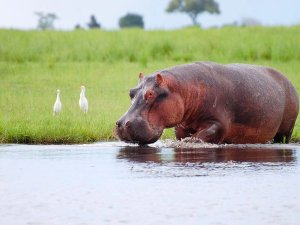
Hippo
If you're spending time near Tanzania's rivers, lakes or wetlands, there's every chance you'll come across one of the country's many hippos. Home to one of Africa's largest hippo populations, Tanzania offers plenty of opportunities to watch these enormous mammals in their natural habitat. Despite their hefty size, hippos spend most of the day submerged in the water to keep cool, with just their eyes, ears and nostrils peeking above the surface. As the sun begins to set, they emerge to graze on grasses, sometimes travelling several kilometres from the water under the cover of darkness.
One of the best places to see large pods of hippos is in the lakes of the Ngorongoro Crater, where dozens can often be spotted wallowing together from the crater rim or nearby viewpoints. They're also commonly found along the Mara River in northern Tanzania, as well as in Lake Manyara and Tarangire National Park. For a closer encounter, a boat safari along the Rufiji River in Nyerere National Park is hard to beat. Here, you can watch hippos snorting, yawning and jostling for space in the water, often sharing the river with Nile crocodiles basking on the banks. It's a completely different safari experience from a traditional game drive and offers a fascinating glimpse into the lives of two of Africa's most formidable aquatic animals.

Smaller mammals
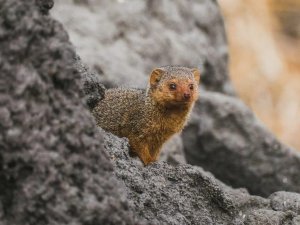
Tanzania's wildlife isn't just about the headline acts. Alongside the famous Big Five and other large mammals, the country's national parks are home to an incredible variety of smaller creatures, many of which are just as fascinating to watch. Keep an eye out for playful bands of mongoose darting through the undergrowth, nocturnal crested porcupines shuffling across tracks after dark, and the famously fearless honey badger, whose tenacity has earned it an almost legendary reputation among safari guides.
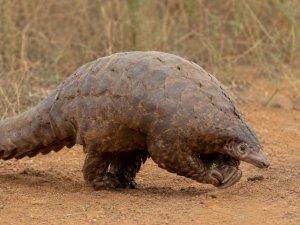
One of Tanzania's rarest residents is the ground pangolin, a shy, nocturnal mammal covered in protective scales. As one of the world's most trafficked mammals, pangolins are critically threatened by poaching and habitat loss, making sightings in the wild incredibly rare. If you're lucky enough to glimpse one on a night drive, it's a truly special experience. Even without a pangolin encounter, taking time to appreciate Tanzania's smaller wildlife adds another layer to your safari, proving that some of the country's most memorable discoveries come in much smaller packages.
Birds
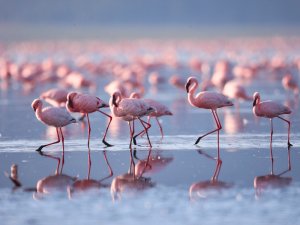
More than 1,100 species of bird can be found in Tanzania, with migratory species joining the country’s endemic birds. The months of the green season between December and March are often best for birding, although you can expect some rain during this period. One unmissable destination is Lake Natron, where 2.5 million lesser flamingo congregate between November and April every year, along with other populations in the Ngorongoro Conservation area, Ngorongoro Crater and Arusha National Park.
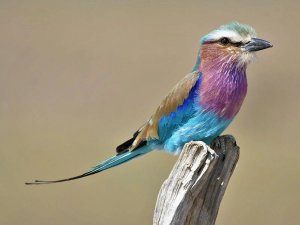
Other highlights include lilac-breasted rollers, secretary birds, sunbirds, love birds, kingfishers, various storks, cranes and ibises, plus raptors, bulbuls, bee-eaters, flycatchers and jacanas, to mention only a few. Tarangire, Lake Manyara and the Serengeti are also good bird-spotting locations.
Marine life
It's easy to associate Tanzania's wildlife with the Big Five and the vast plains of the Serengeti, but there's a whole other world waiting beneath the waves. With almost 900 miles of Indian Ocean coastline, as well as the idyllic islands of Zanzibar and Mafia, Tanzania is home to an incredible variety of marine life. Crystal-clear waters, vibrant coral reefs and warm tropical seas make it one of East Africa's best destinations for snorkelling and diving.
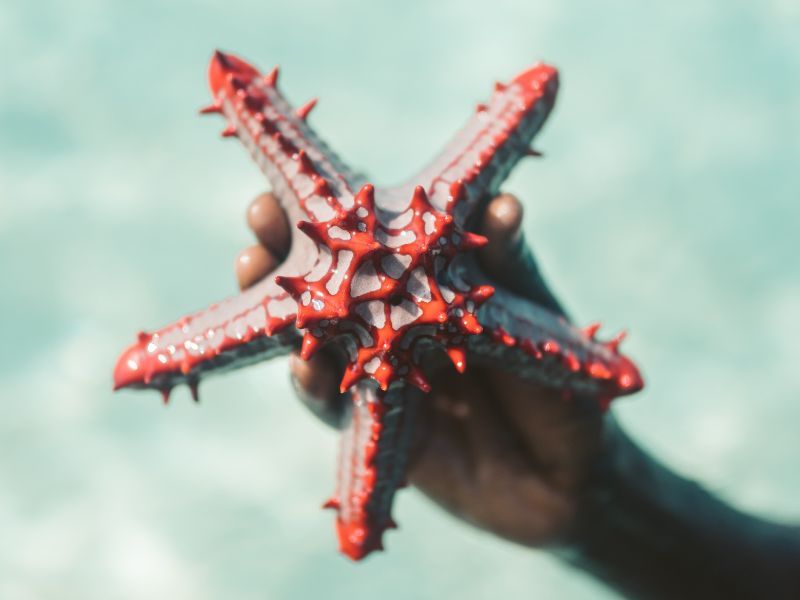
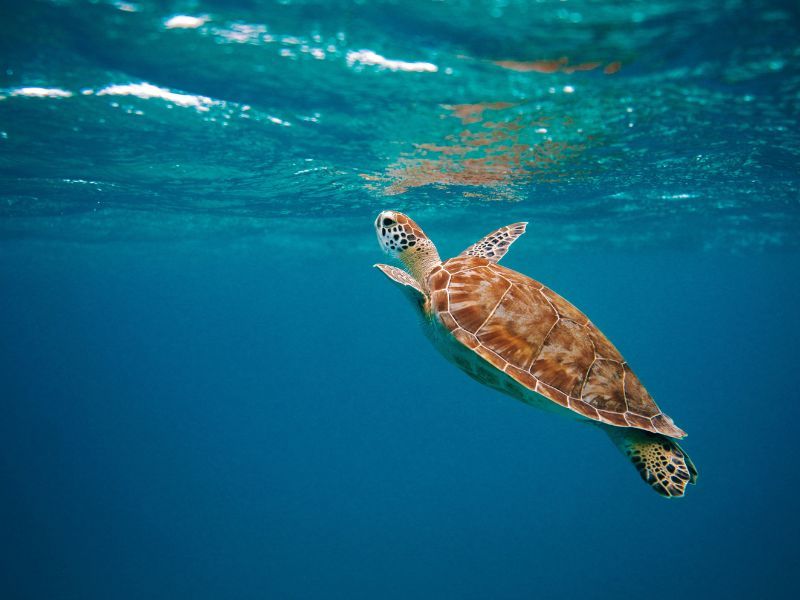
Five of the world's seven species of sea turtle can be found in Tanzanian waters, with tiny hatchlings making their way from Zanzibar's beaches to the ocean between January and May. Bottlenose and humpback dolphins are regularly spotted offshore, while graceful manta rays glide through the deeper waters. For one of the most unforgettable wildlife encounters, head to Mafia Island between October and March, when the world's largest fish – the gentle whale shark – visits to feed in the nutrient-rich waters. Around Zanzibar, colourful coral reefs teem with tropical fish, octopus, starfish and countless other marine creatures, making even a short snorkelling trip feel like swimming through a natural aquarium.
.jpg?w=300&q=85&auto=format)
.jpg?w=300&q=85&auto=format)
The Great Migration
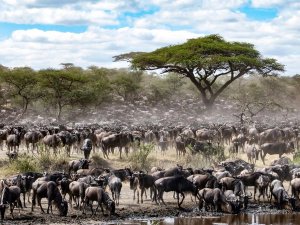
One of the world’s greatest natural spectacles, the Great Migration sees millions of wildebeest, zebra and antelopes travel across the Serengeti to the Masai Mara in Kenya, evading predators on land and in the rivers, enduring hunger and thirst, and braving exhaustion and possible injury along the way.
With giant ‘mega herds’ travelling in huge snaking columns towards the border, the peak of the migration is the perilous Mara River crossing from June to August. But the annual migration sees the herds travelling in a clockwise loop, finishing at the southern plains of the Serengeti in January and February to calve, so there’s more than one opportunity to experience it. The year’s rainfall can mean that both the locations and the timing varies but the monthly cycle tends to follow this pattern.
December, January and February
The large herds stay in the south-east of the Serengeti, particularly around the Ndutu Plains – hundreds of thousands of wildebeest and zebras are born and many lions, cheetahs and hyenas follow in their wake.
March, April and May
The main rainy season begins, prompting the herds to start their journey north up the western corridor, from the Serengeti towards the Grumeti reserve.
June
The mating season takes place for wildebeest, known as the rut, with the herds continuing to move north from the Serengeti.
July and August
The herds cross the Grumeti River towards the Masai Mara in Kenya – expect swimming wildebeest, hungry crocodiles and hunting lions.
September and October
The end of Tanzania’s dry season, the large herds remain mainly in the Masai Mara until the rains start to return at the end of the month.
November
The shorter rainy season is underway, and the herds cross back into Tanzania, travelling south once more towards the Serengeti – the circle is complete!

Tanzania wildlife: What to see where
Serengeti National Park
Covering around 5,700 square miles – an area almost three-quarters the size of Wales – the Serengeti National Park is easily one of the best places to visit in Tanzania. As well as the Great Migration, you can spot the Big Five along with most of Tanzania’s best-known wildlife. Peak season runs during the dry season from around June to September, and January and February between the rainy periods when young animals are born.
Ngorongoro Conservation Area
Home to both the Ngorongoro Crater and the Ndutu Plains, this is another of the best places to see Tanzania’s wildlife. The crater itself, a volcanic caldera surrounded by cliffs, has one of the highest densities of wildlife in all Africa, including big cats such as lions and leopards, black rhino, elephants, hippo and more, plus flamingos on the saline Lake Magadi. The Ndutu Plains are also one of the best places to see wildebeest calve in January and February.
Tarangire National Park
Known for its huge herds of elephants and ancient baobab trees, Tarangire National Park is smaller but a more intimate experience than some of the more sprawling parks, and you’ve got a good chance of seeing four of the Big Five, except for rhino. One of the highlights is a visit between around June and October, when thousands of elephants migrate to the Tarangire river in search of water. Visit in October just before the rains arrive, and you might even be lucky enough to see the baobabs flower.
Nyerere National Park
Africa’s largest national park, Nyerere (formerly known as the Selous Game Reserve) stretches for almost 12,000 square miles. The Rufiji River flows through the park, with river safaris to spot hippos and crocodiles, as well as birds and big cats coming to drink. The park itself is less well-known and less-visited than those in the north of Tanzania, so you can often enjoy a quieter experience spotting the impressive wildlife living here. Around 450 bird species have been seen, along with large elephant herds, rare wild dogs, and four of the Big Five – rhino are officially present but sightings are extremely rare.
Mikumi National Park
Mikumi National Park is often called the Serengeti of the south, thanks to the Mkata floodplain, which attracts many of the same animals. Home to over 400 species of bird, as well as elephants and lions, the landscape is dotted with acacia and baobab trees. Expect to see large herds of zebra, wildebeest, buffalo and impala enjoying the grasslands too, and like many of the other reserves on Tanzania’s southern safari circuit, it’s quieter than the popular northern parks.